About EASI
EASI is a holistic evaluation framework for assessing Multimodal Large Language Models on spatial intelligence. It provides comprehensive coverage across six core dimensions of spatial reasoning, grounded in cognitive science.
Taxonomy of Spatial Capabilities
Six core dimensions of spatial intelligence, derived from cognitive science, that structure the EASI evaluation framework.
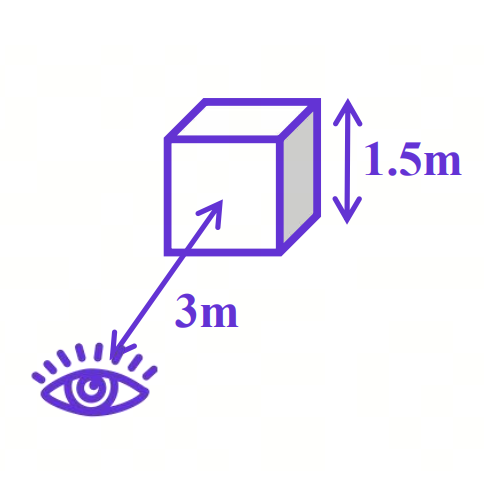
Metric Measurement
Inferring 3D dimensions such as depth and length from 2D observations.

Mental Reconstruction
Constructing complete 3D structure from limited viewpoints.
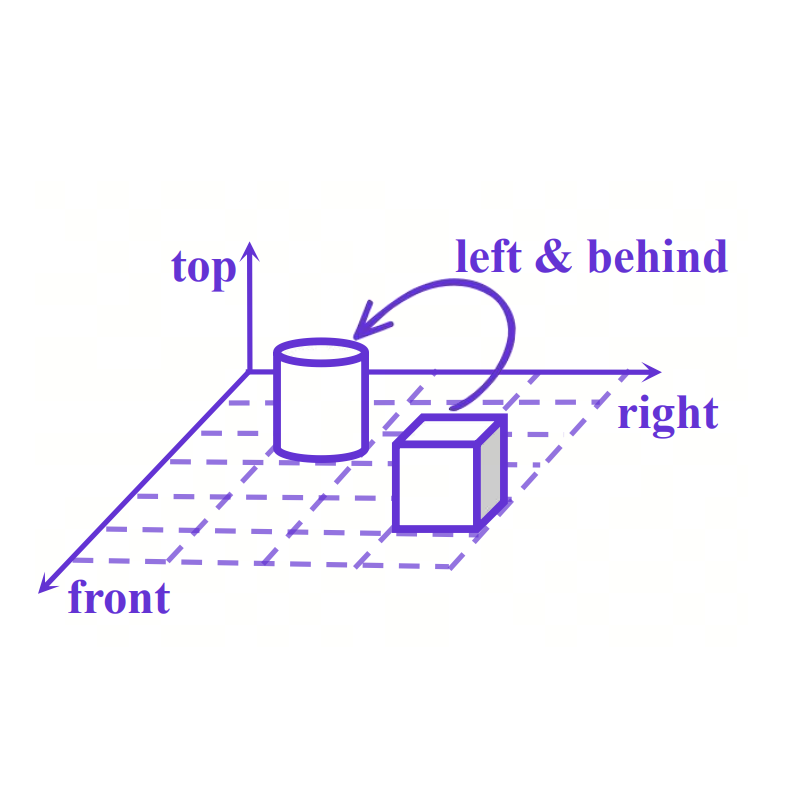
Spatial Relations
Understanding relative positions and orientations of objects.

Perspective-taking
Reasoning about scenes across different viewpoints.
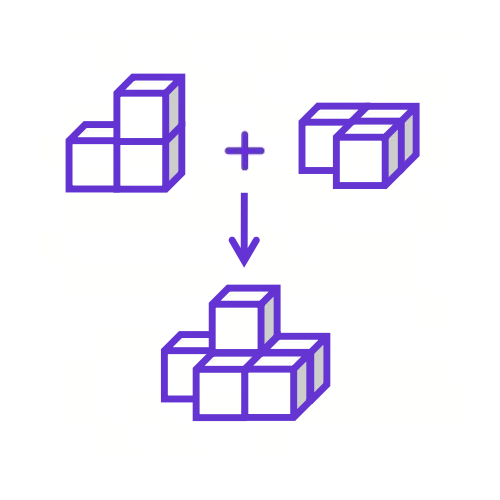
Deformation & Assembly
Understanding structural changes, folding, and assembly.

Comprehensive Reasoning
Multi-stage spatial reasoning combining multiple capabilities.
EASI-8 Benchmarks
Eight curated benchmarks providing comprehensive coverage of spatial reasoning tasks.
VSI-Bench
Acc.Visual-Spatial Intelligence
MMSI-Bench
Acc.Multi-Modal Spatial Intelligence
MindCube-Tiny
Acc.Mental Rotation & Cube Folding
ViewSpatial
Acc.View-based Spatial Reasoning
SITE
CAASpatial Intelligence in Text & Environment
BLINK
Acc.Spatial Perception from Images
3DSRBench
Acc.3D Spatial Reasoning
EmbSpatial
Acc.Embodied Spatial Understanding
Citation
@article{easi2025,
  title={Holistic Evaluation of Multimodal LLMs on Spatial Intelligence},
  author={Cai, Zhongang and Wang, Yubo and Sun, Qingping and Wang, Ruisi and Gu, Chenyang and Yin, Wanqi and Lin, Zhiqian and Yang, Zhitao and Wei, Chen and Shi, Xuanke and Deng, Kewang and Han, Xiaoyang and Chen, Zukai and Li, Jiaqi and Fan, Xiangyu and Deng, Hanming and Lu, Lewei and Li, Bo and Liu, Ziwei and Wang, Quan and Lin, Dahua and Yang, Lei},
  journal={arXiv preprint arXiv:2508.13142},
  year={2025}
} arXiv Paper